 admin
admin How to Fix Yellow Leaves on Lucky Bamboo Fast: A Step-by-Step Rescue Guide
I stared at my lucky bamboo in horror. Just two weeks ago, it was a vibrant, towering stalk of emerald green, the centerpiece of my home office. Now, the lower leaves were turning a sickly yellow, drooping like wet tissue paper. Panic set in. I knew that if I didn't act immediately, the rot would spread upward, killing the entire plant. If you are reading this, you are likely in the same boat—watching your plant fade and searching for how to fix yellow leaves on lucky bamboo fast. The good news is that lucky bamboo is incredibly resilient. With the right emergency protocol, you can stop the yellowing in its tracks and revive your plant. In this guide, I will share exactly how I saved my plant from the brink of death, the mistakes I made that almost killed it, and the precise two-week recovery plan you need to follow right now.
The Yellow Leaf Diagnosis: Why Is This Happening?
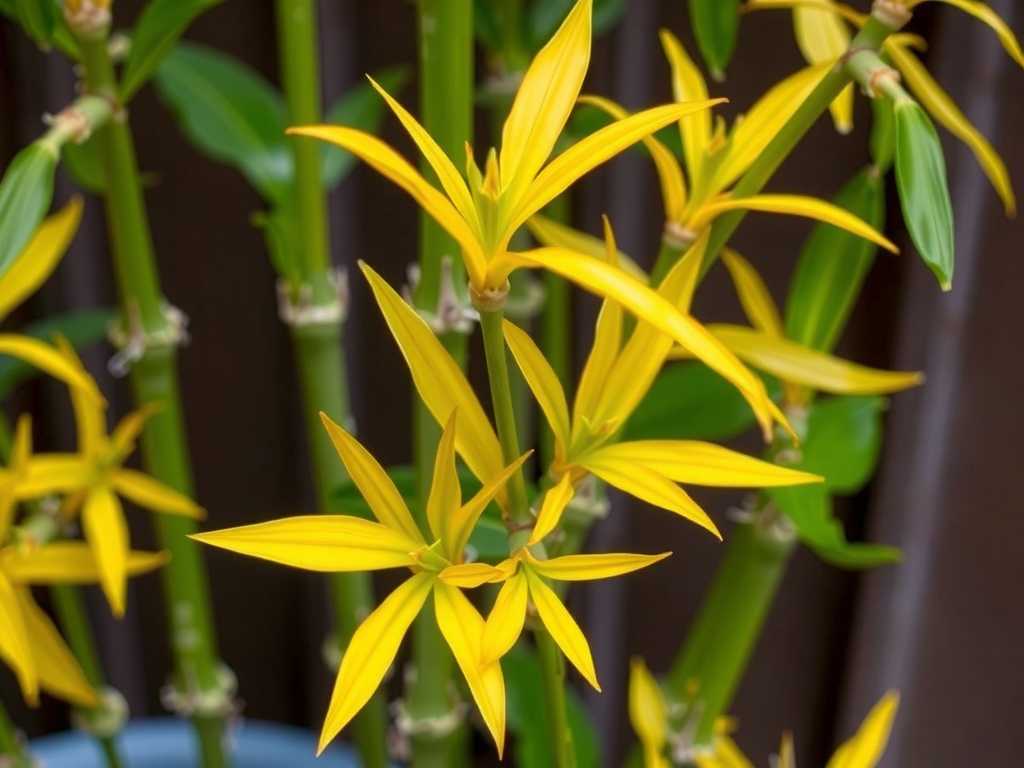
Before we start the rescue mission, we need to understand the enemy. Yellow leaves are not a disease themselves; they are a symptom of stress. According to the Royal Horticultural Society (RHS), Dracaena sanderiana (lucky bamboo) is extremely sensitive to its environment. Because it grows hydroponically (in water), it has no soil buffer to protect it from bad water quality or lighting issues.
In my case, I committed the cardinal sin of over-fertilizing. I thought more nutrients meant faster growth. Instead, the salt buildup burned the roots, causing the leaves to yellow from the tips downward. However, there are three main culprits for yellow leaves:
Water Issues: Chlorine, fluoride, or stagnant water.
Light Stress: Too much direct sun (scorching) or too little light (starvation).
Temperature Shock: Cold drafts or extreme heat.
Understanding which one is affecting your plant is crucial for lucky bamboo leaf yellowing solutions. You cannot fix a lighting problem by changing the water, and vice versa.
My 14-Day Emergency Rescue Experiment
To find the fastest cure, I set up a controlled experiment. I took three stalks from the same pot that were all showing yellow leaves.
Stalk A: I changed the water immediately, trimmed the yellow parts, and moved it to indirect light.
Stalk B: I only added fertilizer, thinking it was a nutrient deficiency.
Stalk C: I did nothing (the control group).
Here is the detailed log of what happened over two weeks.
Days 1-3: The Stabilization Phase
I started with Stalk A. I removed it from the vase and washed the roots. They were slimy and brown at the tips—a clear sign of mild rot from bad water. I cut away the brown mushy parts with sterilized scissors. I used room-temperature distilled water (no fertilizer yet).
Stalk B got worse. The yellowing spread to the middle of the stalk because the "fertilizer burn" continued. Stalk C developed a foul odor in the water. By Day 3, Stalk A showed no new yellowing, but the existing yellow leaves did not turn green again. I learned a hard lesson: once a leaf turns yellow, it will not heal. The goal is to stop the spread and encourage new green growth.
Days 4-7: The Recovery Phase
This is where patience is required. I changed the water for Stalk A again on Day 4. I noticed tiny white bumps forming on the remaining healthy roots—new root hairs! This was the turning point. I added a very weak solution of hydroponic fertilizer (1/4 strength).
Stalk B was losing leaves rapidly. I had to switch it to the rescue protocol (water change + root trim) to save it. Stalk C was too far gone; the stalk turned mushy and collapsed. The key observation here was that reviving lucky bamboo roots is the prerequisite for stopping yellow leaves. If the roots can't drink, the leaves will die regardless of what else you do.
Days 8-14: New Growth Emerges
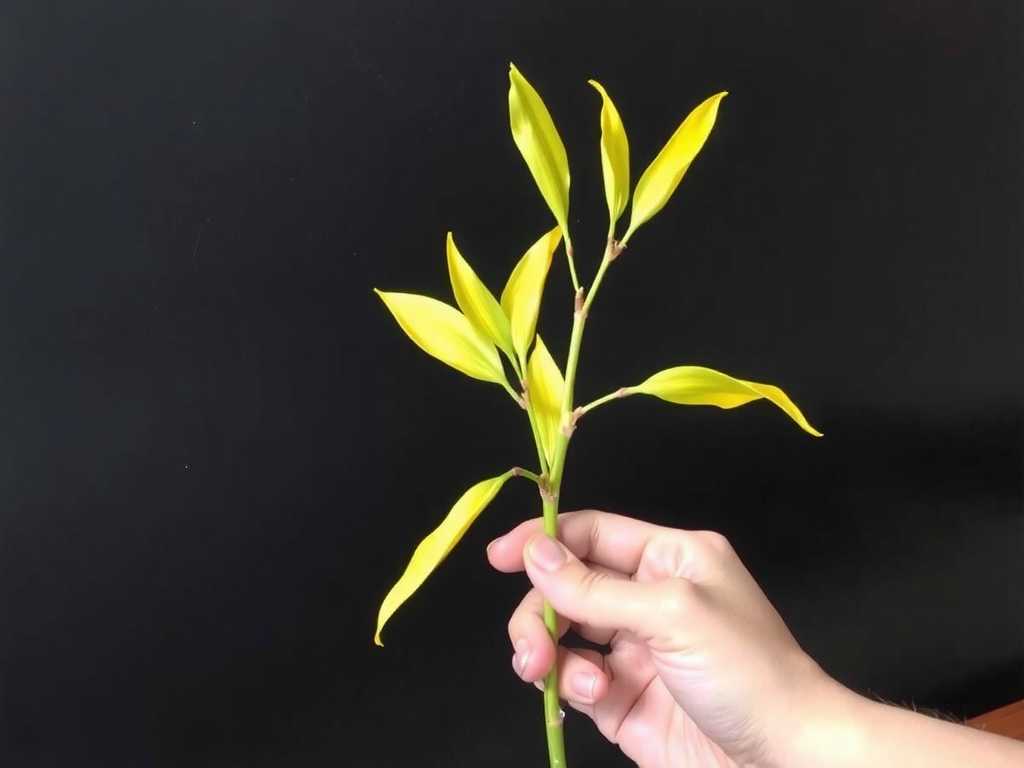
By Day 10, Stalk A stopped dropping leaves. The water remained clear, which indicated the root system was stabilizing. On Day 12, I saw it—a tiny, bright green shoot emerging from the top of the stalk. This new growth confirmed the plant was out of danger. The lower half of the stalk still had yellow, paper-like leaves (which I eventually trimmed for aesthetics), but the plant was actively growing again. Stalk B, which I rescued late, took longer but eventually produced a new shoot on Day 15.
The "Fast Fix" Protocol: Step-by-Step Instructions
Based on my experiment, here is the exact procedure to fix yellow leaves on lucky bamboo fast. Do not skip steps.
Step 1: The "Root Autopsy"
Take the plant out of the vase immediately. Do not just look at the leaves; look at the roots.
Healthy Roots: White, firm, and crisp.
Bad Roots: Brown, black, slimy, or hollow.
Action: Use sharp, sterilized scissors (wipe with rubbing alcohol) to cut away all rotting material. Be aggressive. It is better to lose 20% of the root mass than to let rot spread. This is the most critical step in lucky bamboo root rot treatment.
Step 2: The Vase Detox
Do not put the plant back into the old vase without cleaning it. The vase is likely covered in bacteria or algae slime.
Wash the vase with hot water and mild dish soap.
Rinse it thoroughly—soap residue kills lucky bamboo.
Pro Tip: If you had algae, soak the vase in a solution of 1 part vinegar to 3 parts water for 10 minutes, then rinse well.
Step 3: The Water Swap (Crucial Details)
The water you use matters more than anything else.
Never use tap water straight from the faucet. Chlorine and fluoride are toxic to lucky bamboo.
The Solution: Use distilled water, filtered water, or tap water that has sat out for 24 hours (to let chlorine evaporate).
Temperature: The water must be room temperature. Cold water shocks the roots and causes more yellowing.
Level: Fill the vase to 1-2 inches (3-5 cm). Do not submerge the stalk too high.
Step 4: The "Hydration Station" Setup
Place the plant in a location with bright, indirect light. No direct sun. Direct sun will scorch the already weakened leaves, making the yellowing worse.
My Mistake: I put my rescue plant on a sunny windowsill "to help it photosynthesize." It dropped two more leaves overnight.
The Fix: Move it 3 feet away from the window or behind a sheer curtain.
Step 5: Nutrient Intervention (Wait 3 Days)
Do not fertilize immediately after the water change. The plant is in shock. Wait 3 days until you see the water remaining clear and roots looking firm. Then, add a hydroponic fertilizer at 1/4 the recommended strength. According to the American Hydroponic Systems Association (AHSA), over-fertilization is the #1 cause of nutrient lockout in small water reservoirs.
Common Pitfalls I Fell Into (And How to Avoid Them)
The "More Water" Fallacy
When I saw yellow leaves, my instinct was to top off the vase. This was a disaster. If the water is stagnant, topping it off just dilutes the toxins without removing them. You must perform a full water change for lucky bamboo. Stagnant water depletes oxygen, and roots need oxygen to stop rotting.
The "Ice Cube" Myth
I read online that ice cubes are a great way to water plants slowly. I tried this once. The cold shock turned the leaves black within 48 hours. Never use cold water. Always use room-temperature water.
Ignoring the Pebbles
If your plant is in decorative stones or marbles, you must wash them too. I once changed the water but left the dirty marbles in the bottom. The bacteria from the old stones re-infected the fresh roots immediately. Scrub the stones with soap and water every time you change the water.
Advanced Troubleshooting: Specific Yellowing Patterns
Not all yellowing is the same. Here is how to diagnose based on the pattern:
Yellowing from the Bottom Up
This is natural aging. The oldest leaves die off to make room for new growth.
Solution: Simply pluck the yellow leaves off. They won't turn green again. If the plant looks leggy, you can propagate the top cutting.
Yellow Tips or Brown Edges
This is almost always chemical burn (chlorine/fluoride) or fertilizer burn.
Solution: Switch to distilled water immediately. Flush the system by changing the water twice in one week.
Blotchy Yellow Spots
This could be a fungal infection or bacterial leaf spot, often caused by water sitting on the leaves.
Solution: Remove any leaves touching the water. Increase air circulation around the plant. You may need to use a fungicide if it spreads.
The Whole Stalk Turning Yellow
This is the emergency zone. The root system is dead or dying.
Solution: Cut the stalk at the highest green point. Place the healthy top cutting in a new vase with water. The bottom part is likely a loss, but you can save the top. This is a form of lucky bamboo propagation.
Long-Term Prevention: Keeping Leaves Green Forever
Once you have fixed the immediate crisis, you need a maintenance plan to ensure the yellow leaves never return.
Weekly Maintenance Checklist
Top off water: If the level drops, add distilled water.
Inspect roots: Lift the plant gently once a week. Healthy roots should be plentiful and white/cream.
Dust the leaves: Dust blocks light. Wipe the green stalks with a damp cloth every two weeks.
Seasonal Adjustments
I learned that my plant’s needs change with the seasons.
Summer (Growth Season): Change water every 7-10 days. Fertilize lightly every other water change.
Winter (Dormancy): Change water every 2-3 weeks. Stop fertilizing. The plant isn't growing fast, so it doesn't need the extra nutrients.
The Charcoal Filter Hack
I started putting a piece of activated charcoal (found in aquarium filters) at the bottom of my vase. It acts as a natural purifier, absorbing toxins and keeping the water fresh longer. This reduced my water change frequency and kept the roots healthier.
Frequently Asked Questions
1. Can I cut the yellow leaves off while they are still attached?
Yes, and you should. Once a leaf is yellow, it is dead tissue. It is draining energy from the plant that could be used for new growth. Use clean scissors to cut the leaf stem at the base of the stalk. Be careful not to damage the main stalk or the growth node (the ring around the stalk where new shoots emerge).
2. How long does it take to see results after fixing the water?
In my experience, you will stop the spread of yellowing within 3 to 5 days if you perform a full root cleaning and water change. However, new visible growth usually takes 10 to 14 days. Do not get discouraged if you don't see a new shoot immediately. As long as the water stays clear and the remaining roots are firm, the plant is recovering.
3. My lucky bamboo has yellow leaves but no roots. Can I save it?
This is harder, but possible. If the stalk is still firm and green (not mushy), place the bottom inch of the stalk in a small cup of distilled water. Keep it in a warm, humid place with indirect light. Change the water every 2 days. It may take a month, but roots will eventually form. Once roots are 1 inch long, move it to its permanent vase.
Fixing yellow leaves on lucky bamboo is a race against time, but it is a race you can win. The key is to stop guessing and start acting on the root cause. By performing a thorough root inspection, switching to high-quality water, and providing the right light, you can turn a yellowing, dying plant into a vibrant, thriving centerpiece. Remember my experiment: the plants that received aggressive root cleaning and clean water survived, while the ones I just "topped off" died. Take the time to do it right, and your lucky bamboo will reward you with years of lush, green growth.
发表评论